
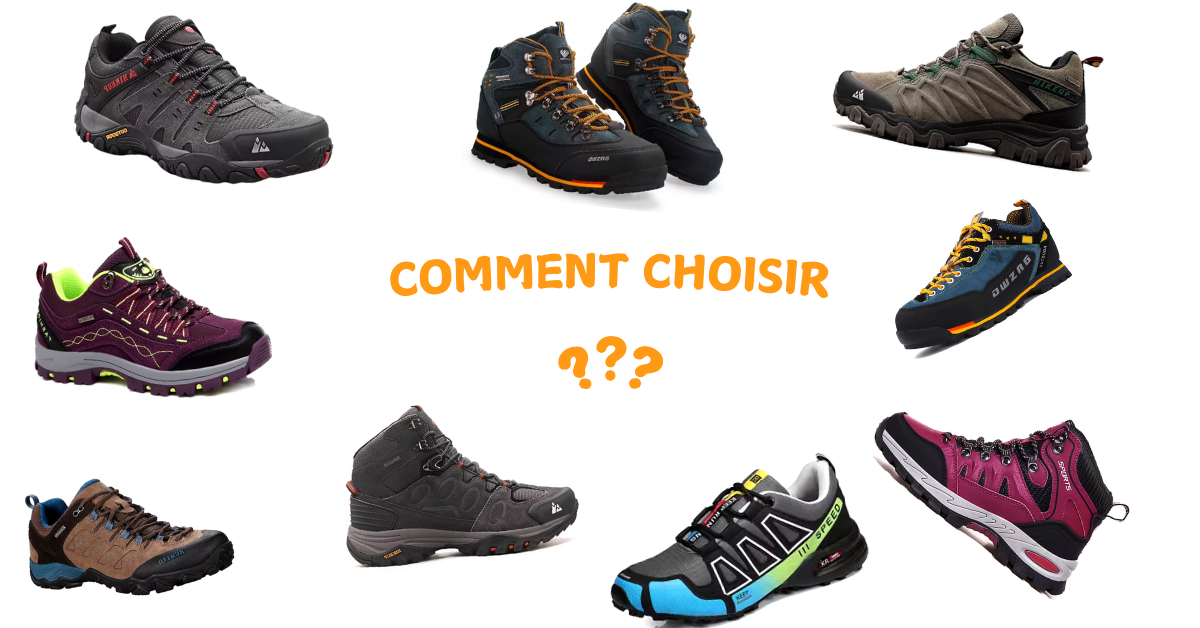
When embarking on a hiking adventure, choosing the right pair of shoes is often one of the most important decisions you'll make. No matter how prepared you are or how good your gear is, the wrong shoes can quickly ruin the experience. Foot pain, blisters, or a lack of support can turn a pleasant outing into a real ordeal.
Hiking boots are not just an accessory; they are the foundation of your comfort and safety. Choosing the right boots ensures you get the most out of every step, whether you're on a flat trail, in the mountains, or across steep paths.
It is therefore essential to understand that a pair of hiking boots is not a one-size-fits-all product. Every foot, every hiker, and every type of terrain requires a different model, which is why it is crucial to consider several factors when making your choice. This involves identifying the best boots suited to your hiking profile, your preferences, and how you intend to use them.
In this article, we will detail each aspect to consider when choosing your shoes, giving you all the keys to finding the ideal pair.
The different types of hiking shoes
The hiking shoe market offers a wide variety of models, each suited to a specific type of terrain and activity. To make the right choice, it's important to understand the function of each type of shoe and the situations in which it excels. Here's an overview of the different types of hiking shoes and recommendations for their uses.
1. Lightweight shoes
Description :
Lightweight hiking shoes are designed for relatively easy terrain and day hikes or short outings with a light pack. They offer an excellent balance of comfort, flexibility, and breathability. These models are often made of synthetic materials or mesh to ensure lightness and ventilation.
Benefits :
- Very lightweight, they are perfect for hiking on flat or slightly rugged terrain.
- They allow for a great deal of freedom of movement.
- Their breathable materials are ideal for warm climates.
Disadvantages:
- Less ankle support, making them unsuitable for difficult or rocky terrain.
- Offering little protection against the elements, they are not ideal in the rain or on wet ground.
Ideal terrain:
Lightweight shoes are perfect for hiking in the countryside, forests, or on well-marked trails. They are suitable for relatively flat terrain where reinforced ankle protection and maximum grip are not essential.
2. Mid-height or trekking shoes
Description :
Mid-height hiking boots, also known as "mids," are a versatile choice that combines the best of both worlds: the lightness of low-cut boots and the support of high-cut boots. They offer a good compromise between stability and flexibility, making them perfect for multi-day hikes on varied terrain.
Benefits :
- Good ankle support without being too rigid.
- Versatile, they adapt to a wide variety of terrains.
- Often equipped with waterproof membranes for hiking in wet conditions.
Disadvantages:
- Less lightweight than low-cut shoes, they can cause fatigue over long distances on easy terrain.
- Being slightly more rigid, they sometimes require a period of adjustment.
Ideal terrain:
Mid-height shoes are ideal for longer hikes, multi-day treks, or routes with moderate elevation gain. They are also suitable for trails with rocks and roots, and offer a good compromise for varied terrain from forest to mountain.
3. Mountaineering boots and difficult terrain
Description :
Mountaineering boots are designed for technical and rugged terrain, as well as for hiking on steep slopes or in extreme weather conditions. They are generally equipped with high, rigid uppers to ensure maximum ankle and foot support. Furthermore, they are often compatible with crampons for routes on snow or ice.
Benefits :
- Exceptional support, optimal protection for ankles and feet.
- Increased grip on rough, rocky or snowy terrain.
- Compatible with crampons for winter hiking or high mountain trekking.
Disadvantages:
- Heavy and rigid, they can be uncomfortable on flat terrain or for long walks on easy trails.
- Being less breathable, they can be too warm for summer hikes.
Ideal terrain:
These shoes are designed for high mountaineering, alpine hiking, or trekking in very rugged terrain. They are also perfectly suited to icy or snowy surfaces and extreme conditions.
How can we assess your specific needs?
Once you have an idea of the different types of shoes available, the next step is to assess your personal needs. This includes considering your experience level, the types of terrain you regularly walk on, the season and climate, and how often you go out.
1. The hiking experience
Beginner:
If you're new to hiking, it's important to choose shoes that offer good support and optimal comfort. For your first hikes, mid-height or lightweight shoes will be perfectly adequate, as long as you're not tackling overly technical terrain.
Intermediate :
For hikers who are starting to gain experience, it's possible to consider more varied and technical terrain. At this stage, investing in a mid-cut or more technical shoe may be necessary, especially if you plan on longer or more challenging hikes.
Confirmed:
If you're an experienced hiker who traverses mountains with ease, you'll need a pair of shoes that can handle all types of terrain. More technical models, such as mountaineering boots, can be essential for moving safely on steep trails or in challenging conditions.
2. The type of terrain
Plains and marked trails:
For hikes on flat terrain, marked trails, or with minimal elevation gain, lightweight and flexible shoes will be perfectly adequate. They will provide the comfort and lightness needed for extended walks without tiring your feet.
Mountains and rugged trails:
If you're hiking in the mountains or on technical trails, stability becomes paramount. Shoes with good grip and excellent ankle support are essential to prevent injuries. Opt for mid- or high-top shoes that will protect your feet from rocks and roots.
Off-trail and difficult terrain:
Hikers who prefer to explore off the beaten path should choose more rigid and robust footwear. A high upper combined with a lugged sole will provide better traction on difficult terrain, such as scree, rocks, or snowy sections.

Technical criteria for hiking boots
When choosing hiking boots, it's not enough to simply consider the type of boot or the terrain. The technical features of the boot play a fundamental role in its comfort and performance. Here's an overview of the most important elements to check before making your choice.
1. The stem
The upper is the top part of the shoe that wraps around and protects your foot. It comes in different heights and materials, which directly affects support and protection.
- Low-cut : It offers more flexibility and lightness, but less ankle support. Ideal for easy hikes or relatively flat terrain.
- Mid-height upper : It combines support and flexibility, making it an excellent choice for various types of hiking. It protects the ankle while remaining relatively lightweight.
- High-top : It provides excellent ankle support, necessary for difficult or mountainous terrain. However, it is heavier and can restrict movement if it is too rigid.
Stem materials :
- Leather : Very durable, it offers good support and excellent protection against the elements, but it can be heavier and less breathable.
- Synthetic : Lightweight and often more breathable, synthetic materials allow moisture to escape more easily, but they are generally less durable than leather.
- Mesh : Used to improve ventilation, mesh is lightweight and breathable, perfect for warm climates, but it does not offer the protection against water and debris that other materials can provide.
2. The sole
Outsole
The outsole is the part of the shoe that comes into direct contact with the ground. It must provide sufficient grip to adapt to various types of terrain. Vibram soles, highly regarded for their durability and ability to offer excellent traction on diverse surfaces, are often used.
The notches and the grip
The deeper and more widely spaced the lugs, the better the sole's grip on challenging terrain such as muddy or rocky trails. Soles with shallower lugs are generally better suited to flat trails.
Midsole
Located between the outsole and the insole, it plays a crucial role in cushioning and stability. Materials such as EVA (ethylene-vinyl acetate) or polyurethane (PU) are used to create midsoles capable of absorbing shocks and supporting the foot over long distances.
- Flexible soles : Offer more comfort, but less support, making them suitable for flat terrain or for occasional hikers.
- Rigid soles : They provide more stability, especially on rough terrain, and are perfect for experienced walkers.
3. Waterproofing and breathability
If you regularly walk on wet terrain or in rainy climates, waterproof footwear is essential. Most waterproof shoes use membranes like Gore-Tex, which keep feet dry while allowing internal moisture to escape.
Disadvantages of waterproof membranes :
While these membranes protect against external moisture, they can sometimes limit breathability, especially in summer or warm weather. It is therefore crucial to choose footwear suited to the weather and seasons.
4. The weight
The weight of a shoe can significantly impact your comfort, especially on long walks. Lightweight shoes reduce fatigue, but they often offer less support and protection. Conversely, heavier shoes, while more protective, can quickly tire the walker.
Advice :
Find a balance between protection, comfort and lightness according to your specific needs and the duration of your hikes.
Trying on shoes: sensations and tips to look for
Once you've selected a few shoe models based on their type and technical features, the next step is to try them on in-store. Here are some tips to make the most of this fitting and ensure the shoes you choose are a perfect fit.
1. Choosing the right shoe size
Shoe size is a crucial factor, but it often varies from brand to brand, and it's common to feel confused by the different sizing systems (European, American, British). Using Mondo Point, a universal sizing system based on your foot length in centimeters, can help you determine the correct size.
When trying them on, make sure there's a slight gap at the front of the shoe to prevent your toes from hitting the end during descents, which could cause pain and blisters. If necessary, go up half a size.
2. Adjusting the lacing
Classic lacing:
Proper lacing is essential for correctly fitting the shoe to your foot. Tighten the laces firmly, starting at the bottom and working your way up, ensuring your foot is well supported without being compressed. Good lacing allows the shoe to adapt to the shape of your foot and ensures even pressure distribution.
Self-locking hooks:
If your shoes have self-locking hooks (often found on mid- and high-top models), use them to secure the laces at the ankle. These hooks provide better stability and prevent your foot from slipping inside the shoe.
Quick lacing system:
Some shoes, especially trail running models, feature a quick-lace system. You simply pull a handle to adjust the entire shoe. This system is convenient for those looking for a fast and efficient solution, but make sure it provides good support for your foot, especially on longer hikes.
3. Test the feel in the shoe
Once the shoes are laced correctly, take the time to walk, jump, and jog lightly around the store. This will allow you to test the overall comfort and identify any potential pressure points or uncomfortable areas.
- Toe box space: There should be a slight gap between your toes and the end of the shoe to prevent them from hitting the front, especially when going downhill.
- Width and volume: The shoe should hug your foot without compressing it. A well-supported foot, without being too tight, is key to comfort during long walks.
- Heel support: The heel should be slightly locked to avoid any rubbing, but there should also be a small tolerable movement (about half a centimeter of play is acceptable).
4. Try it with a backpack
One common mistake when trying on hiking boots is not taking into account the weight of the backpack. A heavy pack alters your foot support, especially in the arch of your foot. If you plan to carry a heavy pack on your hikes, ask the salesperson to lend you a weighted pack to simulate real-life conditions.
5. The price factor
Price is often a deciding factor when choosing your shoes. However, it's important to ask yourself the right questions: how often will you be using these shoes? For occasional hikes on easy terrain, you can opt for less expensive models. On the other hand, if you plan on hiking regularly on technical terrain, investing in a higher-quality pair will be a wise choice in the long run.
Essential accessories to optimize comfort
When we talk about hiking, we often think of shoes as the main element. However, complementary accessories like socks and insoles play just as important a role in ensuring your comfort. Investing in good accessories can make all the difference between an enjoyable hike and an outing ruined by foot pain.

1. Hiking socks
Socks are an often overlooked element, but they contribute significantly to foot comfort inside shoes. Wearing the wrong socks can cause blisters, chafing, or even pain due to a lack of support. Here are the criteria to consider:
- Sock volume : It's important that the sock is neither too thick nor too thin. Socks that are too thick can add bulk inside the shoe, which can hinder comfort and the necessary space for your toes.
- Materials : Opt for technical socks made from breathable, moisture-wicking materials such as merino wool or specific synthetic fibers. These materials help keep your feet dry, reducing the risk of blisters.
- Support and cushioning : Some hiking socks are specially designed to offer extra arch support or cushioning in pressure areas such as the heel or ball of the foot.
Example :
Brands like Tanzant are renowned for producing technical socks specifically designed for hikers' needs. They combine lightness, breathability, and enhanced support in sensitive areas, while also regulating temperature to keep feet dry and comfortable.
2. Insoles
The insoles that come with hiking boots are often basic and don't offer enough support, especially for hikers with high or low arches. If you tend to experience pain after several hours of walking, it might be time to invest in specialized insoles.
- Pre-molded insoles : These are designed to provide extra support for your arch. These insoles can significantly improve comfort, especially if you have issues such as high arches or poor arch support.
- Custom insoles : For a perfect fit, you can opt for custom-made insoles from specialists. These are particularly recommended for hikers who walk long distances or who experience recurring problems with fatigue or foot pain.
Example :
The IFITNA brand offers pre-molded or custom-made insoles adapted to different types of feet. They provide optimal support and help prevent traumatic pathologies in the knees, pelvis and spine, by rebalancing the walker's posture.
3. Gaiters
Gaiters are essential accessories for hikers who travel on wet, muddy, or snowy terrain. They protect your shoes by preventing water, snow, or mud from getting inside. They fasten around the ankle and generally extend to mid-calf, providing a barrier against the elements.
- Lightweight gaiters : Perfect for protecting against mud or water splashes when hiking in wet terrain or after rain.
- Reinforced gaiters : Ideal for hiking in high mountains or in winter conditions, they are often made of waterproof and resistant materials.
4. Cleats
If you're planning winter hikes or hikes in the high mountains, it's essential to have crampons on hand. These metal devices, which attach to the sole of your shoe, allow you to walk safely on icy or snowy surfaces.
Types of cleats:
- Lightweight crampons : Suitable for hikers who mainly travel on snowy, but non-technical trails.
- Technical crampons : Used for more demanding routes, including glacier hikes or winter climbs.
5. Hiking sandals
While they don't replace traditional hiking boots, sandals can be an excellent addition for hikers looking to lighten their load. They're especially useful for walking on flat terrain in warm weather or for crossing streams. Plus, they allow feet to breathe after a long day of hiking in closed shoes.
Example :
Brands like Teva or Merrell offer technical sandals that provide both good foot support and excellent grip on rough terrain.
In conclusion
Choosing your hiking boots shouldn't be taken lightly. It's a crucial investment that will directly impact your experience on the trails. By considering your hiking profile, the type of terrain you'll be walking on, as well as the technical criteria and comfort of your gear, you'll be able to make an informed choice.
Remember that every foot is unique, and the best shoe for your friend might not be the best for you. Take the time to try them on properly, test the different sensations, and above all, don't neglect the accessories, which also play a crucial role in your comfort and performance.
I invite you to browse our online store , Bivouacamp , where we offer a selection of hiking boots and accessories suitable for all types of hikers. Happy hiking everyone, and above all, find the perfect fit!

Leave a comment
All comments are moderated before being published.
This site is protected by hCaptcha and the hCaptcha Privacy Policy and Terms of Service apply.