
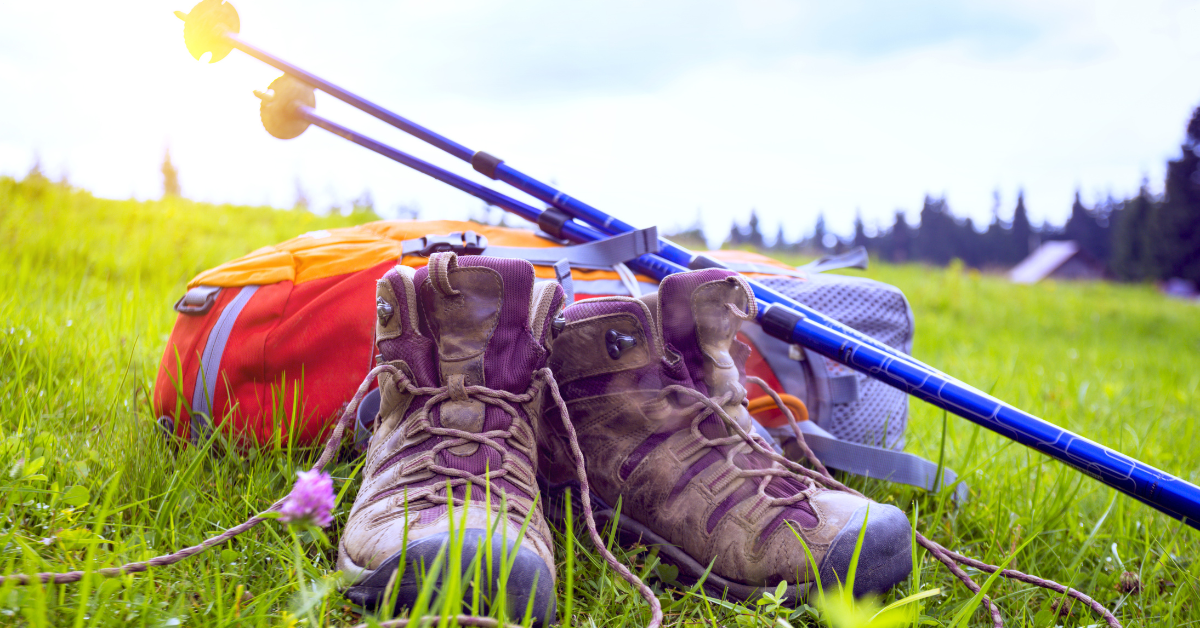
Trekking poles are much more than just a hiking accessory; they provide added comfort, ensure greater safety, improve your performance both uphill and downhill, and, above all, significantly reduce fatigue. But how do you use them correctly to reap all the benefits? This is a question many hikers ask, especially beginners who want to be sure these poles are worth their weight in gold. In this article, we'll answer all your questions about using trekking poles on a hike, based on the advice of an experienced mountain guide.
Using trekking poles offers numerous advantages: they improve comfort, enhance safety, aid performance for those seeking speed, and, above all, reduce fatigue . To fully benefit from these advantages, it's important to understand a few key points: how to properly adjust your poles, use the wrist strap correctly, and adapt your technique to the terrain. We'll examine these aspects in detail so your poles become your allies on your next hikes.
How to properly adjust your walking poles?
The first crucial aspect of using your poles effectively is knowing how to adjust them correctly. A poorly adjusted pole loses much of its usefulness and can even become a hindrance. There's a simple rule for determining the correct pole length: multiply your height by 0.68 . This calculation will give you a basis for adjusting the height of your poles. On most hiking poles, you'll find markings to help you precisely adjust the height. However, it's important to understand that this rule is a guideline and may vary depending on your body type. What really matters is maintaining a 90° angle at your arm when holding your poles. This angle is crucial for ensuring the comfort and efficiency of your poles.
When hiking on varied terrain, it's also necessary to adjust the length of your poles. For example, when climbing a slope, it's advisable to shorten your poles by 5 to 10 cm . This allows you to maintain an optimal angle and makes the ascent easier. Conversely, when descending, lengthening your poles by 5 to 10 cm will help you better absorb shocks and maintain your balance.
If you're using multi-section poles, here's an additional tip to improve their durability: adjust each section so they're all the same length. This helps distribute the forces exerted on the pole and prevents vibrations, which is especially useful on long hikes where accumulated fatigue can reduce the poles' effectiveness.
Using the wrist strap: a matter of efficiency and comfort
Another aspect often overlooked by hikers is the correct use of the wrist strap. However, knowing how to use it properly can significantly reduce fatigue in the arms and hands , while also preventing problems like blisters. It's common to see hikers using the wrist strap incorrectly, which limits the benefits of their trekking poles.
Here's how to use the wrist strap correctly: start by threading the strap from the bottom, then wrap your hand around the handle, naturally conforming to its shape. There's no need to grip the handle tightly. The goal is to reduce muscle fatigue by allowing your hands to rest lightly on the strap, preventing excessive strain on the muscles of your hand and forearm. This also reduces the risk of blisters, which can become a real problem on long rides.
It's also essential to adjust the wrist strap tension correctly. If it's too tight, it can restrict blood flow to your hands, leading to discomfort. Conversely, if it's too loose, you'll lose efficiency while walking , as you'll have to compensate with a firmer grip on the handle. The ideal setting lies between these two extremes, where the wrist strap provides good support without being too tight.
However, there is one specific situation where using wrist straps is not recommended: downhill skiing. In this situation, it's crucial to be able to quickly release your poles in case of a fall so you can catch yourself with your hands. Keeping the wrist straps on during a descent can increase the risk of injury if you can't release them quickly.
Adapt your technique to the terrain: propel yourself effectively and balance your efforts
One of the most common questions is how to use trekking poles effectively depending on the terrain. Poles are useful in all situations, but it's important to know a few specific techniques to get the most out of them. Using them allows for better distribution of muscle load, reduces stress on the joints, and improves balance . An often underestimated advantage is that they also provide efficient propulsion, which reduces fatigue by allowing you to use both your upper and lower body.
Many hikers wonder if it's possible to use just one pole instead of two. It's perfectly possible, and it can provide a certain sense of security. However, this doesn't allow you to fully benefit from the advantages of poles. Using two poles is much more efficient , both for balance and propulsion.
When walking on flat or slightly hilly terrain, the best technique is to use alternating gaits. This means you will extend your left arm forward at the same time as your right foot, and vice versa. You should place the tip of your pole at the same height as your opposite foot, which will allow you to maintain good balance while propelling yourself forward efficiently.
On steeper slopes, a different technique called simultaneous walking can be more effective. In this technique, you place both poles down at the same time, then take three steps before repeating. This method allows for better distribution of effort between the upper and lower body and increases propulsion, which is particularly useful on ascents. Also, consider adjusting the length of your poles as mentioned earlier, shortening them slightly to make climbing easier.
On descents, the techniques are similar. You can use alternating walking on gentle slopes, but on steeper inclines, simultaneous walking will be more suitable. Extending your poles in this situation will help you maintain your balance and better absorb shocks. An interesting technique is to place the palm of your hand on the top of the grip to slow your movement , which reduces muscle and joint stress in the legs. This can be particularly useful on unstable terrain where it's easy to lose your balance.
When crossing a river or traversing an obstacle, your walking sticks become invaluable allies. To do this, you can place the tips of your sticks below the edge and press down on the top of the handle with the palm of your hand. This allows you to cushion your movements and cross more easily without risking losing your balance.
Finally, on sloping terrain, it's important to readjust the length of your poles or the position of your hands to maintain good balance. If one of your arms is no longer at a 90° angle, you can remove the wrist strap and place your hand under the grip. On some pole models, you'll even find foam under the grip for added comfort . If the slope is long, you can also choose to shorten one pole to regain a balanced position.
Conclusion
Using trekking poles can transform your hiking experience , whether in terms of comfort, safety, or performance. To reap all the benefits, it's essential to adjust your poles correctly , know how to use the wrist strap properly, and adapt your technique to the terrain. Poles aren't just an accessory for challenging climbs or steep descents; they accompany you throughout your hike to reduce fatigue and improve your performance . If you'd like to learn more or discover other equipment for your outings, visit our blog or explore our online store to find all the gear you need for your outdoor adventures.


Leave a comment
All comments are moderated before being published.
This site is protected by hCaptcha and the hCaptcha Privacy Policy and Terms of Service apply.