
Bushcraft, often perceived as a survival discipline in the wilderness, is a practice that combines skills, know-how, and self-reliance. When venturing far from civilization, a good survival kit can prove essential. But what should this kit contain, and why is it so important to prepare it properly? This article offers a complete guide to assembling a survival kit tailored to your needs.
Why a Survival Kit Is Essential
Whether you're a hiking enthusiast, an experienced camper, or simply an adventurer seeking the great outdoors, a survival kit is your best ally for dealing with the unexpected. This kit goes far beyond simple tools; it's a combination of essential items to ensure your safety and comfort in critical situations.
It's important to understand that each environment presents its own unique challenges. A survival kit must therefore be tailored to the context: whether you're in the mountains, a forest, or a desert, the conditions and risks will differ. By preparing your kit, you ensure you're ready for any eventuality, whether it's protecting yourself from the elements, finding food, or navigating in unfamiliar terrain.
Essential Elements of a Survival Kit
Putting together an effective survival kit relies on a few key principles: meeting your basic needs (shelter, warmth, hydration, food) while ensuring safety and navigation. Here are the essential elements of a good survival kit:
1. Lighting a Fire: Fireflint and Lighters
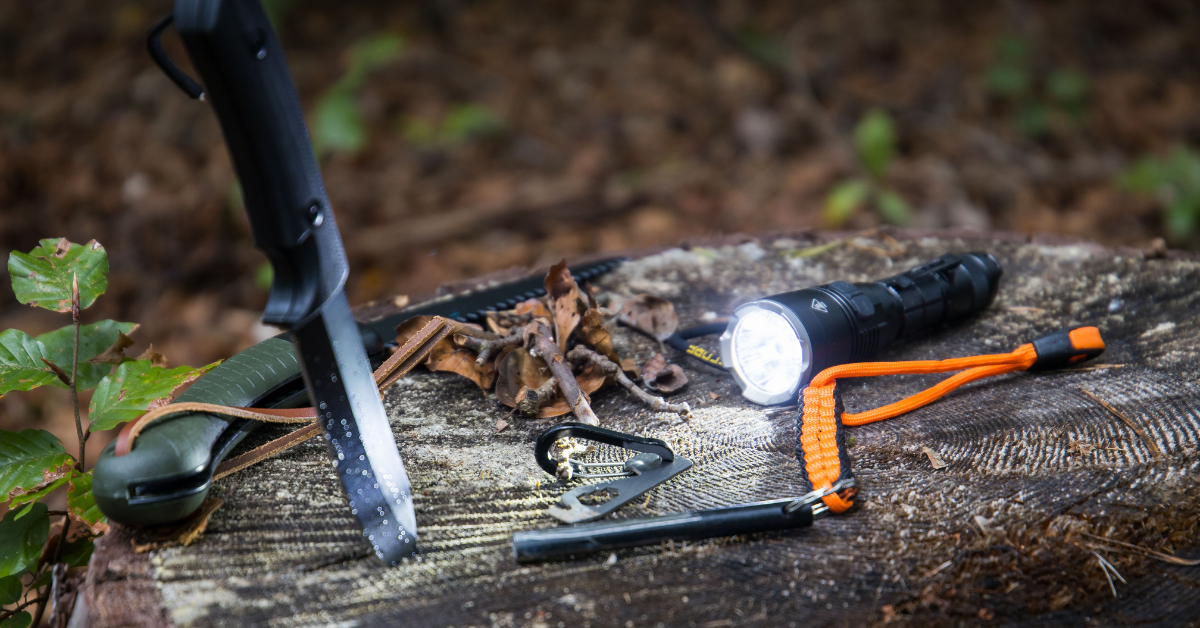
Fire is one of the cornerstones of survival in the wild. It allows us to cook, purify water, keep warm, and ward off predators. The most reliable way to start a fire in all conditions is with a firesteel. This tool works even in the rain or in humid environments, where a simple lighter might fail. For added safety, it can be useful to carry one or two lighters as well, to save time in less critical situations.
The fire starter, however, requires some practice. Practicing using it before going on an expedition can make all the difference when you actually need its sparks to light a fire.
2. Fuels: Facilitating Ignition
In addition to a fire starter, it's wise to carry tinder that will help start a fire quickly, even in difficult conditions. Here are some examples of effective tinder:
- Resinous wood sticks : Impregnated with natural resin, these sticks ignite quickly and produce intense heat.
- Paraffin-coated jute rope : Waterproofed, this rope lights easily and burns slowly, providing a long-lasting fire source.
- Barks and resins : Dried tree bark and fir resin are natural fire starters available locally in many environments.
These fuels ensure a reliable flame source, whatever the situation.
3. The Multi-Purpose Knife: The Essential Tool
The knife is undoubtedly the central element of any survival kit. It allows you to cut wood, prepare food, build a shelter, or defend yourself. There are two main types of knives to consider:
- Multi-purpose folding knife : Practical and compact, this type of knife can be used for a variety of tasks. Multi-tool models often offer useful accessories such as saws, screwdrivers, or scissors.
- Fixed blade knife : A sturdy fixed blade knife is ideal for heavier tasks such as cutting thick branches or splitting wood (batoning). It is recommended to choose a model with a full tang blade (the blade passes completely through the handle) to ensure its strength.
These two types of knives are complementary and will allow you to deal with a wide variety of situations.
4. The Compass: The Art of Orientation
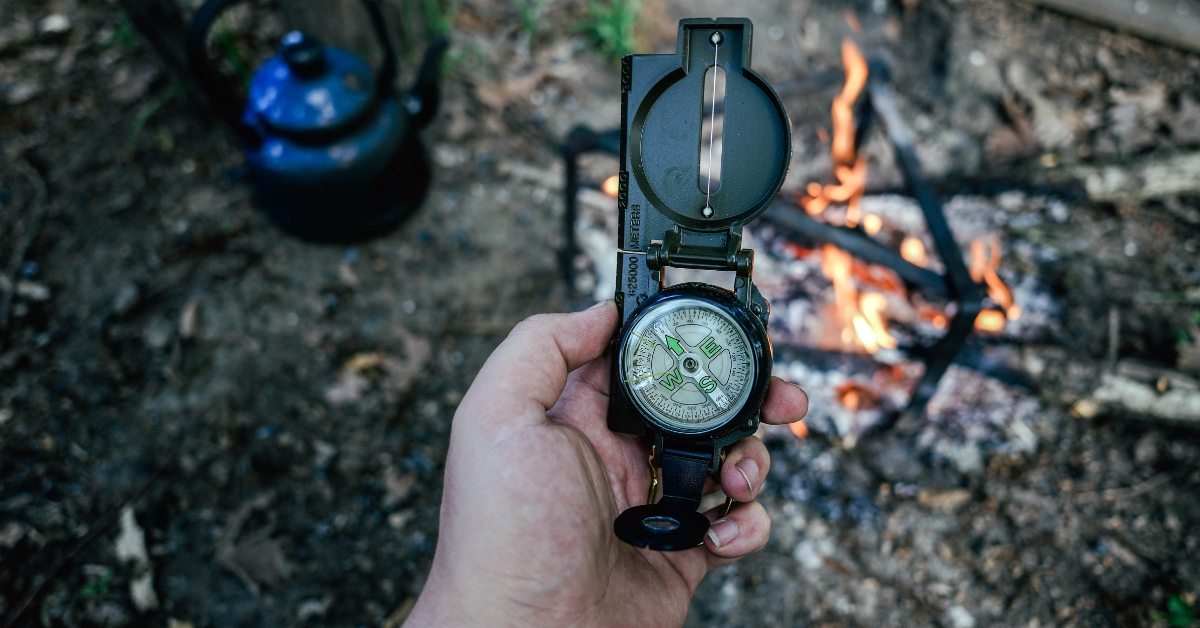
In the wilderness, it's easy to lose your bearings, especially when the weather changes suddenly. A good quality compass will help you orient yourself and find your way. Combined with a topographic map of the area, it will provide precise navigation, even in unfamiliar environments.
For tech enthusiasts, a GPS can also be useful, but keep in mind that these devices depend on their battery life, whereas a compass works at all times.
5. The Survival Blanket: Protection Against the Elements
In extreme conditions, a survival blanket can save your life. Designed to reflect body heat, it protects you from the cold while providing a barrier against wind and moisture. Easy to carry, it can also be used as a temporary shelter.
Modern versions of survival blankets are compact, durable, and reusable. It's advisable to always have one on hand, whether hiking, mountaineering, or even in the car.
6. The Whistle: Signaling Your Presence
In an emergency, a simple whistle can be invaluable for signaling your location over long distances. Its piercing sound can be heard for miles, far beyond what you could achieve with your voice. It is therefore essential to carry one attached to your backpack or around your neck for easy access.
7. The Waterproof Bag: Guardian of Your Equipment
When venturing into humid environments or crossing rivers, keeping your belongings dry becomes paramount. A waterproof bag protects your essentials, such as spare clothes, electronic equipment, or fire starters, from the elements and ambient humidity.
A good quality waterproof bag is essential for any bushcraft or survival enthusiast, and can also serve as a float in case of water crossings.
8. First Aid Kit: Essential in Case of Injury
No outdoor adventure should be undertaken without a first-aid kit. Although often overlooked, it is crucial for treating minor injuries or scrapes that could become infected. It should contain plasters, bandages, antiseptics, as well as scissors, tweezers, and basic medications (pain relievers, antihistamines).
Remember to regularly check the contents of your first aid kit and replace expired items before each shipment.
9. Paracord: Versatility and Robustness
Paracord is an extremely strong rope, originally used in parachute suspension lines. In a survival situation, it can be used to secure a shelter, pitch a tarp, make tools, or carry firewood. A good length of paracord doesn't take up much space but can prove useful in a multitude of situations.
Some survival bracelet designs even incorporate small sections of paracord, allowing for easy access at any time.
10. Sewing Kit: For Last-Minute Repairs
When you're out in nature, a tear in your clothing or a broken strap can quickly become a problem. A compact sewing kit makes it easy to repair your gear on the spot. Remember to include strong needles and heavy-duty thread, and don't forget versatile paracord, which can also be used as robust sewing thread for emergency repairs.
Assembling Your Survival Kit: Preparation and Adaptation
Putting together your own survival kit is a personal endeavor that should be tailored to your environment and objectives. Rather than buying a pre-assembled kit, creating your own allows you to select quality tools suited to your specific needs and avoid unnecessary items. You can also test each tool before setting off on your expedition to familiarize yourself with its use.
In short, a good survival kit is an indispensable companion for any adventurer in the wilderness. By including reliable tools like a fire starter, a versatile knife, a compass, and a survival blanket, you increase your chances of facing any unforeseen situation with confidence and peace of mind. Each item in the kit plays a vital role and must be carefully chosen to suit your specific needs and the conditions you will encounter.
Personalizing Your Survival Kit: Some Practical Tips
Every adventurer has their own survival priorities, and that's precisely why assembling your own kit is so important. Here are a few tips to help you personalize your kit and make it even more effective:
1. Adapt the content to the duration and type of shipment
A survival kit for a day hike in the forest will not be the same as a kit for a multi-day mountain expedition. For short outings, minimal equipment may suffice, while a longer adventure will require additional supplies in terms of food, clothing, and tools.
2. Take weather conditions into account
If you're heading to a cold or wet region, your priority will be protecting yourself from the cold and damp. In this case, pack extra equipment to insulate yourself from the ground (such as a sleeping mat), waterproof clothing, and an extra emergency blanket. If you're going to a dry and hot environment, consider bringing additional water storage and purification methods.
3. Regularly check your kit
Before each outing, it's essential to check that all your equipment is in good condition and that nothing is missing. Replace any expired items in your first-aid kit, refill your lighters if necessary, and make sure all your tools are working properly. Also, take the time to test your gear so you're not caught unprepared in an emergency.
Prepare Mentally and Physically
A survival kit will only be truly effective if you know how to use it correctly. It's therefore crucial to prepare not only by assembling your kit, but also by practicing basic techniques such as starting a fire, using a compass, and building a shelter. Regularly practicing bushcraft skills will make you more confident and self-reliant when you're out in the wilderness.
Furthermore, good physical preparation is essential. Carrying a complete survival kit on your back requires a certain level of endurance, especially if you're in challenging environments like mountains or dense forests. Practice walking with your backpack and managing your energy over long distances to be ready for the day of your adventure.
The Golden Rule: Leave No Trace
When practicing bushcraft, it is essential to respect the environment around you. One of the fundamental rules is to leave no trace of your visit. Always take your trash with you, extinguish your fires safely, and be mindful of your impact on local wildlife. By following these principles, you contribute to the preservation of natural spaces for future generations.
Conclusion: The Survival Kit, Your Insurance in the Wild
Bushcraft and wilderness survival are not just useful skills, but also a way of life that connects us to nature and our most primal instincts. By putting together a well-thought-out survival kit tailored to your needs, you ensure you can face any unforeseen situation with confidence and peace of mind.
Whether you're a seasoned adventurer or a curious beginner, taking the time to prepare a personalized survival kit is a key step in your preparation. Choose reliable tools, test them before you leave, and always make sure to check your kit before each expedition. With proper preparation, your adventure in the great outdoors will become an unforgettable experience, where self-reliance and discovery are paramount.
Finally, remember that the essence of bushcraft lies in respecting nature. Always leave the area as clean as you found it and be careful not to disturb local ecosystems. By following these principles, you can enjoy nature safely while contributing to its preservation.
This article offers a complete guide to assembling your survival kit and preparing you for the unexpected challenges of bushcraft. For all your bivouac and adventure gear needs, feel free to visit our Bivouacamp shop to discover our selection of quality equipment.

Leave a comment
All comments are moderated before being published.
This site is protected by hCaptcha and the hCaptcha Privacy Policy and Terms of Service apply.