
The Way of St. James , also known as the Camino de Santiago , is one of the world's most famous long-distance hiking routes. This centuries-old path leads pilgrims and hikers through diverse landscapes, from mountains to valleys and picturesque villages, culminating in the city of Santiago de Compostela in Spain. More than just a hike, this route is a spiritual journey for many, and also a wonderful opportunity to discover regions of France and Spain in a unique way.
The Characteristics of the Way of St. James
Distance, Duration and Elevation Gain
The long-distance hiking trail of Saint James varies depending on the route chosen to reach Santiago de Compostela. The total distance therefore depends on the starting point. For example, the Le Puy Route (or Podiensis Route ) covers approximately 605 km with varying elevations. Depending on the walking pace and the chosen stages, this long-distance trail can be completed in 1 to 2 months . What distinguishes it from other long-distance hiking trails is the flexibility of the route. Each pilgrim or hiker can begin their adventure wherever they wish and define their own stages.
In France, there are four main routes to reach Santiago de Compostela: the Paris Route , the Vézelay Route , the Puy-en-Velay Route , and the Arles Route . These paths converge at Saint-Jean-Pied-de-Port , one of the most emblematic points of passage before crossing the Pyrenees to reach Spain.
A Trail Suitable for Everyone
The Way of St. James is suitable for hikers of all levels. Unlike some more technical long- distance trails , such as those in the Alps, it is accessible to those without extensive hiking experience, although some steeper sections still require a reasonable level of fitness. Thanks to the trail's regular traffic and the numerous services available to pilgrims, such as luggage transfers and hostels, it is easy to hike only specific sections.
This allows those who wish to experience a long-distance hike without committing to several months to complete only a portion of the route. It is also possible to divide the journey into several trips, as many pilgrims and hikers have done over the years.
The Routes of Santiago de Compostela: A Network of Paths Across France
The Way of Le Puy-en-Velay: One of the Most Beautiful Trails
The Way of Le Puy , also known as the Via Podiensis , is undoubtedly one of the most popular and beautiful routes to Santiago de Compostela . Starting in Le Puy-en-Velay , in the Auvergne region, this footpath crosses several areas of great landscape diversity. Among the most notable are the Margeride , the Aubrac Plateau , and the Lot Valley . The route is dotted with villages listed among the most beautiful in France, notably Conques and its Romanesque abbey church, a popular stop for hikers due to its architecture and history.
This long-distance hike offers breathtaking panoramas at every stage. The Aubrac Plateau is distinguished by its vast expanses where pastures and forests alternate, while the villages of the Lot Valley, such as Saint-Côme-d'Olt and Estaing , add a touch of medieval charm. In addition to the beauty of the landscapes, the Way of Le Puy is also rich in encounters. Hikers, whether they are there for a spiritual pilgrimage or simply an adventure, often share unforgettable moments with other walkers.
The Vézelay Way: Between Nature and History
The Vézelay Way , or Via Lemovicensis , is another of the great historical routes leading to Santiago de Compostela . This long-distance hiking trail begins at the famous Vézelay Basilica in Burgundy, a UNESCO World Heritage Site. The path crosses diverse landscapes, from the peaceful forests of the Gartempe Valley to the plains of the Limousin .
Hikers on this route particularly appreciate the tranquility and diversity of the landscapes they traverse. The rolling hills, meandering rivers, and charming little villages offer an immersion in nature, far from the main tourist routes. Although this route is less frequented than the one to Le Puy, it is no less rich in history and spirituality.
The Human Experience on the Way of St. James
Encounters and Solidarity
One of the unique characteristics of the Camino de Santiago is its atmosphere. Unlike other long-distance trails where encounters may be more sporadic, the Camino de Santiago is renowned for the bonds that form between hikers. Every day, pilgrims cross paths, walk together, share meals, and exchange stories. These encounters on the trail can transform a simple hike into a truly enriching human experience.
Interactions are all the easier on the Camino de Santiago because everyone is traveling through roughly the same stages. The hostels and shelters along the route are ideal places for interaction. The simplicity of life on the Camino, with its moments of sharing and mutual support, creates a unique sense of community.
A Personal and Spiritual Experience
While many hikers undertake the Camino de Santiago for religious reasons, others do so on a personal quest. This long-distance trail is often a time for reflection, an opportunity to take stock of one's life and choices, and to reconnect with oneself. The pace of the walk, the beauty of the landscapes, and the solitude of certain sections allow for profound introspection.
Whether for the physical challenge, to meet people, or simply to enjoy a long hike, the GR to Santiago de Compostela has a dimension far greater than that of a simple outdoor adventure. It is a path of transformation, where every step counts as much as the destination.
Accommodation and Services Along the Way
Gîtes and Refuges
On the Camino de Santiago , the infrastructure for hikers is plentiful and well-organized. Unlike other long-distance hiking trails , where bivouacking is often necessary, here, accommodations can be found almost every 10 to 20 kilometers. Hostels and refuges are present in most of the villages along the route. These places are designed to welcome pilgrims and hikers in a friendly and welcoming atmosphere.
These hostels offer simple but nourishing meals, as well as shared dormitories. The atmosphere is often conducive to relaxation and conversation, with pilgrims from all walks of life sharing their experiences over dinner. Some hostels even offer additional services such as laundry , which can be particularly useful during a long walk.
Transportation and Logistics Services
Another advantage of the Camino de Santiago is the availability of transport services to lighten the load. Many providers offer luggage transfer services, allowing hikers to walk lighter while having their belongings transported from one hostel to the next. This option is ideal for those who want to fully enjoy the journey without being burdened by an overly heavy backpack.
In addition, for those who wish to shorten certain stages or quickly return to their starting point, public transport services, such as buses or trains, are also available throughout the route.
The Unforgettable Landscapes of the Camino de Santiago
Spectacular Views of the Pyrenees
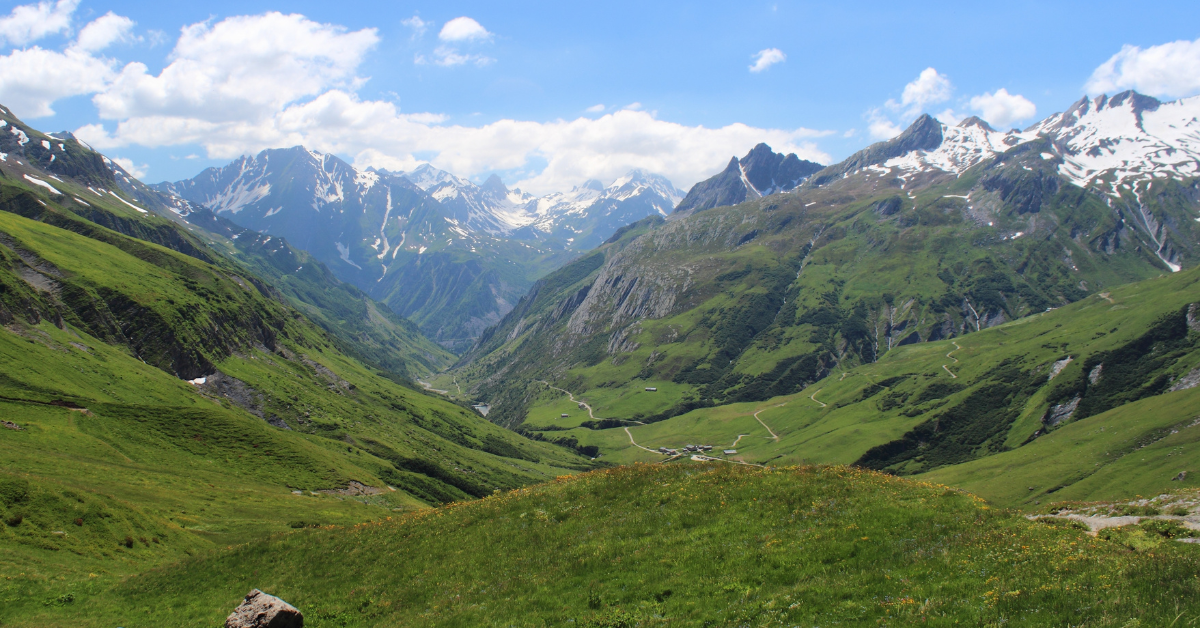
Crossing the Pyrenees on the Way of St. James is undoubtedly one of the most majestic sections of the route. Leaving Saint-Jean-Pied-de-Port , hikers begin a gradual ascent that leads them through dense forests, verdant pastures, and steep ridges offering breathtaking panoramas. Reaching the summit of the Roncevaux Pass marks the entry into Spain and is a high point of the journey.
From the pass, the views over the Spanish valleys stretch as far as the eye can see, with mountain peaks silhouetted against the horizon. This stage is also steeped in history, as it was a route taken by medieval pilgrims, and it continues to evoke a unique atmosphere of physical challenge and spiritual contemplation.
The Plurality of Landscapes Along the Way
Along the entire Camino de Santiago long-distance hiking trail , the landscapes vary dramatically, offering unparalleled visual richness. After crossing the Pyrenees, the path descends into more hilly and rural regions, passing through vineyards, fields of grain, and small Spanish villages where time seems to stand still. The contrasts between the different sections of the trail make each day unique.
In Spain, the Camino Francés , one of the main routes of the Camino de Santiago , crosses iconic regions such as Navarre , Castile and León , and Galicia , each with its own unique natural and cultural characteristics. The diversity of landscapes, ranging from the vast arid plateaus of the Meseta to the lush, verdant forests of Galicia , is one of the reasons why this hiking trail is so popular with walkers from all over the world.
Preparation for the Way of St. James
Essential Equipment
The success of a long hike on the Camino de Santiago depends largely on good preparation. Although this long-distance trail isn't as technically demanding as some other mountain paths, having the right equipment is crucial to avoid injury and discomfort. A pair of sturdy and comfortable hiking boots is essential, as is a well-fitting backpack large enough to hold all your essentials.
Depending on the time of year, hikers should also pack clothing suitable for varying weather conditions. The Camino crosses regions where conditions can be highly variable, with hot days in summer and cool nights at higher altitudes. A rain poncho is essential, especially in wetter sections like Galicia , known for its frequent downpours.
The Logistics of the Way
Unlike other, more isolated long-distance hikes, the Camino de Santiago offers well-established logistics. Hikers don't need to carry large quantities of food, as they can resupply regularly in the villages and small towns they pass through. Numerous restaurants, grocery stores, and bakeries dot the route, making resupplying easy and convenient.
For those who prefer not to carry a heavy pack, luggage transfer services are available on most sections of the trail. This allows for lighter travel, which is especially useful for less experienced hikers or those who want to fully enjoy the scenery without being weighed down.
Arrival in Santiago de Compostela
The Final Destination: An Iconic City
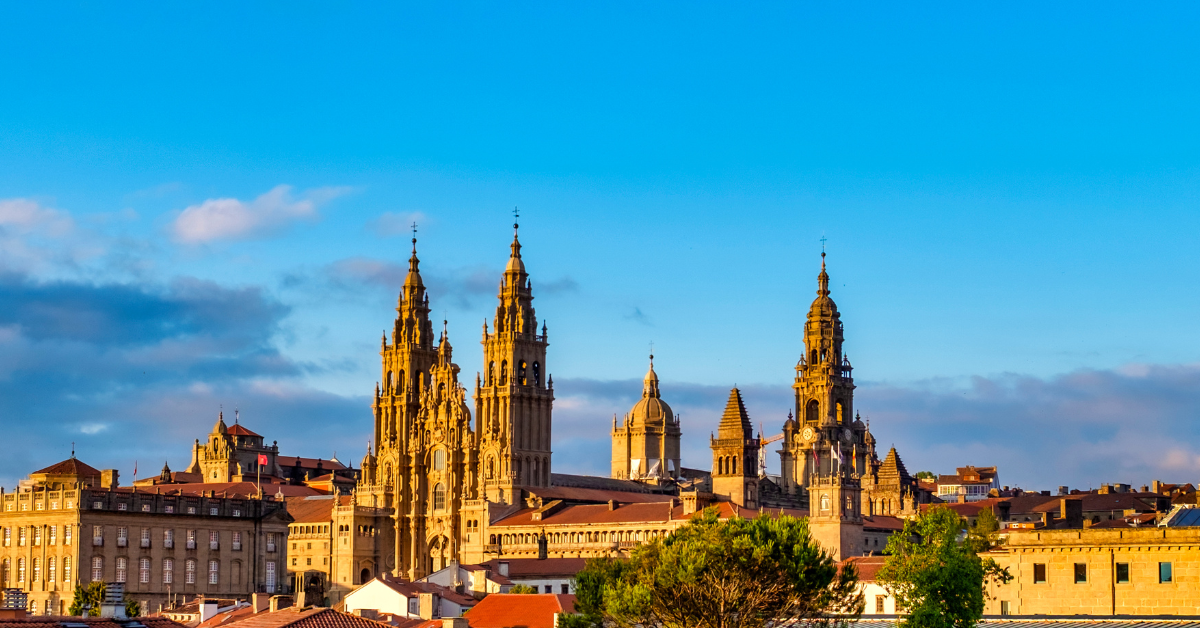
Arriving in Santiago de Compostela is an unforgettable moment for all those who have hiked the GR trail to the iconic cathedral. After weeks, even months, of walking, hikers finally discover the majestic towers of the cathedral that houses the tomb of Saint James , the apostle. This final stage is marked by profound emotion, whether spiritual or simply related to the accomplishment of a personal challenge.
The square in front of the cathedral, the Praza do Obradoiro , is often filled with exhausted but elated pilgrims from all walks of life, ready to celebrate the completion of their journey. It's a gathering place where stories of the walk are shared and where people take the time to contemplate what they have accomplished. For many, arriving in Santiago marks the end of an extraordinary adventure, but also the beginning of a reflection on the lessons learned from this unique and long trek .
La Compostella: The Pilgrim’s Certificate
Upon arrival, hikers can receive the Compostella , an official certificate issued by the Cathedral of Santiago de Compostela attesting to the completion of the pilgrimage. To obtain this certificate, it is necessary to have walked at least 100 km or cycled 200 km, and to have their pilgrim's passport (credential) stamped at the various locations along the route. This is a centuries-old tradition that adds a powerful symbolic dimension to the experience of the Camino de Santiago .

Leave a comment
All comments are moderated before being published.
This site is protected by hCaptcha and the hCaptcha Privacy Policy and Terms of Service apply.