
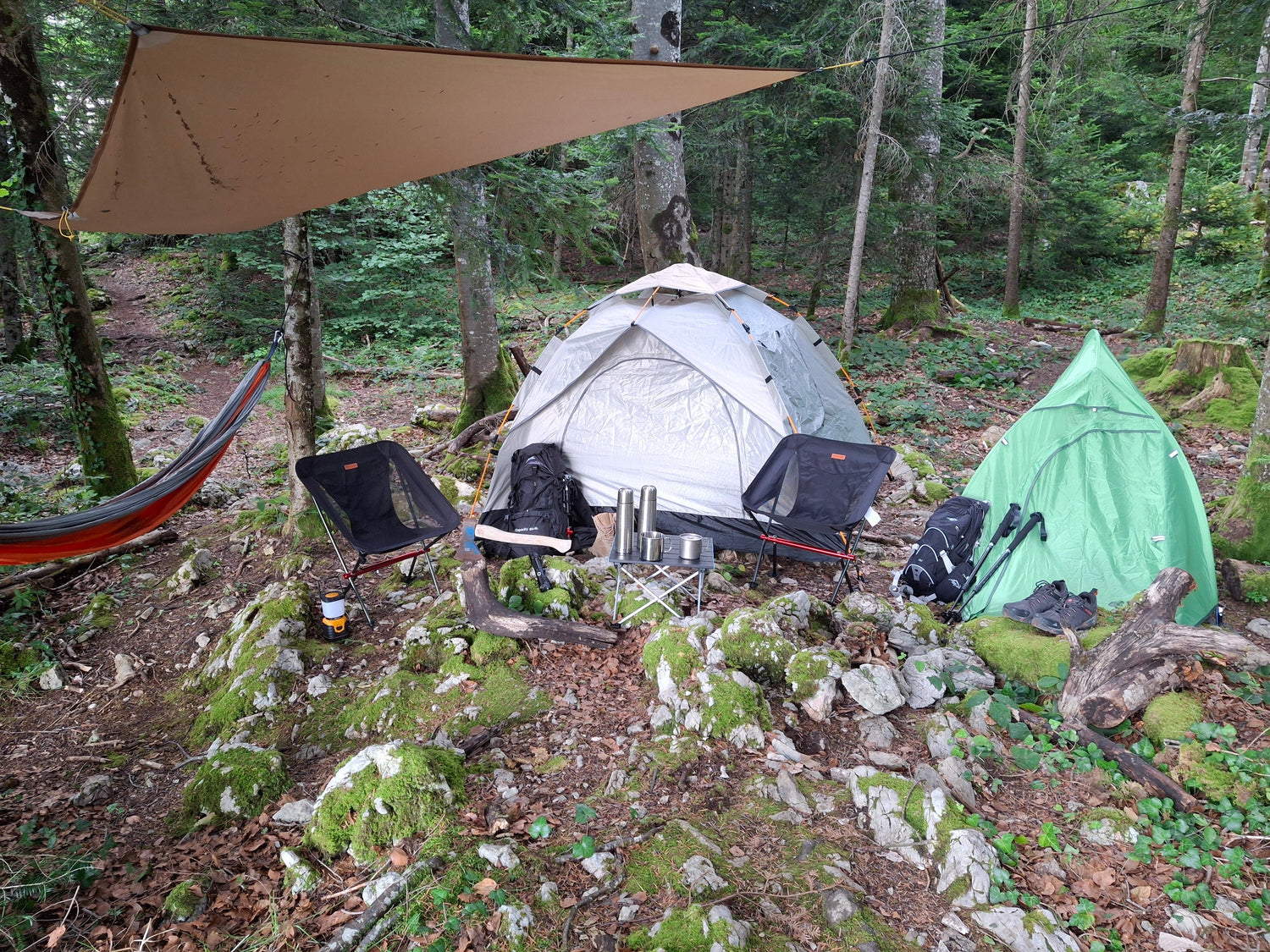
Bivouacking, the practice of camping in the wilderness, far from conventional facilities, attracts a growing number of adventurers each year in search of simplicity and freedom. The pleasure of bivouacking lies in the essentials: a lightweight and mobile campsite, a night under the stars, and the feeling of being at one with nature. This comprehensive guide will help you prepare and set up your campsite in the great outdoors, maximizing both comfort and safety.
By reading this article, you'll discover best practices for choosing a bivouac site, how to pack efficiently and lightweight, and essential tips for a successful bivouac. Whether you're in the mountains, the forest, or by a lake, setting up camp requires careful preparation and respect for the environment.
Prepare the Ground for the Bivouac Camp
The first step to any successful bivouac is choosing the ideal spot to set up camp. A bivouac site must be safe, stable, and suited to the surrounding conditions. A good campsite can make the difference between a pleasant night and an uncomfortable experience. Here are the elements to consider when preparing the perfect spot for your bivouac.
Choice of the site
When it comes to camping, the terrain is key. Stable ground, free of sharp stones or exposed roots, allows you to properly lay down your sleeping mat and sleeping bag. Comfort on the ground greatly contributes to the quality of your sleep. Opt for a flat surface and, if possible, one that is slightly elevated to avoid dampness.
Orientation and location
A good bivouac site should also take orientation into account. At higher altitudes, it's recommended to choose a spot slightly back from the ridges to avoid direct exposure to strong winds. If you're in a forest, the trees can offer natural protection from the wind. Near a lake or river, be sure to keep a safe distance to minimize the risks associated with a sudden rise in water level.
Weather conditions
Weather conditions play a central role in choosing a campsite. If heavy rain is forecast, avoid low-lying areas that could become puddles. Bivouacking, while more spontaneous than traditional camping, requires a good deal of vigilance.
Essential Equipment for a Successful Bivouac Camp
Equipment plays a crucial role in the success of a bivouac camp. To maximize comfort while remaining lightweight, each item must be carefully chosen. Here is the essential equipment to bring for a bivouac camp, whether for one night or several days in the wilderness.
- Tarp or lightweight tent: The tarp is an excellent alternative to a tent for those who want a minimalist bivouac camp. Lightweight, easy to set up, and highly adaptable, the tarp can be pitched in various ways depending on the weather conditions. For a mountain bivouac, it can be stretched between two trees or secured with trekking poles. The ability to customize the shelter to the terrain makes the tarp... Ideal for camping in nature.
- Air mattress and pillow: Sleeping directly on the ground can be uncomfortable, even dangerous, due to heat loss. An air mattress is therefore essential. Opt for a lightweight yet insulating model designed for bivouacking and hiking. An inflatable pillow or a rolled-up jacket can provide head support, offering extra comfort without adding weight to your pack.
- Choosing the right sleeping bag: Selecting the right sleeping bag is crucial for a good night's sleep. Down sleeping bags are prized for their lightness and insulating properties. However, they require careful maintenance and can be susceptible to moisture. A synthetic model is often recommended for more humid climates. Your sleeping bag, a true ally for your nights camping, should be chosen according to the minimum temperatures you are likely to encounter.
- Headlamp and survival gear: A headlamp is an essential accessory for any camper. It frees up your hands to set up camp, cook, or read, and its battery life is often sufficient for several nights. In addition to light, a first-aid kit and a multi-tool are essential survival items to deal with unexpected situations.
- Portable stove and utensils: To prepare a hot meal in the great outdoors, a compact and lightweight stove is the ideal solution. Gas or alcohol stoves are particularly popular for camping trips due to their efficiency and ease of use. Don't forget lightweight utensils, such as a cooking pot , a mug, and stainless steel cutlery, for a pleasant meal at your campsite.
How to Organize a Bivouac Camp to Maximize Comfort
Setting up camp is a key step to fully enjoying your bivouac. The strategic placement of equipment ensures increased comfort and safety.
Define the camping areas
In a bivouac camp, defining different zones helps create a functional and organized space. The sleeping area should be separate from the cooking area to avoid food odors and attracting animals. Setting up an additional shelter for belongings can be useful, especially in case of rain.
Safety and accessibility of equipment
The equipment should be arranged to facilitate access to essential items such as a headlamp, first aid kit, and spare clothing. Storing items in waterproof bags protects them from moisture and ensures they remain accessible.
The Art of Bivouac: Setting Up and Dismantling Your Camp Responsibly
Respect for the environment is the very essence of bivouacking. To leave nature untouched, it is essential to set up and take down camp without leaving a trace. The goal is to enjoy nature while preserving it for future generations and other adventurers.
Eco-friendly assembly
Choose a location that minimizes your impact on local flora and fauna. For example, avoid setting up camp on plants or moving rocks for comfort. If campfires are permitted, use existing fire pits to minimize their impact. Portable stoves are recommended for cooking without disturbing the ground.
Managing waste
Always carry a bag to take your rubbish home and be sure to leave no trace of your visit. When camping, the saying is simple: "what you bring in, you take out." Avoid leaving food scraps, as they can attract animals and disturb their natural habitat.
Preserve natural resources
If you use water from a lake or river for drinking or cooking, be sure to filter or purify it. Do not let soap or chemicals run into the water, even if they are biodegradable, to protect aquatic ecosystems.
Dismantle the camp without leaving a trace
Once you've finished camping, be sure to pack everything up and restore your campsite. Remove any visible traces, replace any stones you moved, and scatter any leaves or twigs. The goal is to leave the site exactly as you found it, so that nature remains untouched.
Practical Tips for Optimizing the Comfort of Your Bivouac Camp
A comfortable bivouac often relies on small details that, when combined, make all the difference. Here are a few tips to optimize the comfort of your camp.
Protect from the wind
When setting up camp, using natural elements like rocks or trees can effectively block the wind. In the mountains, the tarp's orientation is crucial for ensuring comfortable shelter. A tarp stretched taut between trees or anchored with poles can protect you from gusts while still providing adequate ventilation.
Staying warm at night
Temperatures can drop at night, especially at higher altitudes. Use thermal clothing, thick socks, and cover yourself with a survival blanket or sleeping bag liner to maximize warmth. Adding an insulating layer between your sleeping mat and the ground is a good way to prevent heat loss through conduction.
Organize a friendly camp
Set up a space for cooking and sharing a meal, even while camping. A small cooking pot or portable stove allows you to prepare a hot drink, essential for warming up and enjoying the moment in nature. Headlamps and LED candles also create a cozy atmosphere once night falls.
Reduce the weight of your equipment
Camping requires traveling light. Opt for versatile and compact equipment, such as collapsible cooking utensils or mesh storage bags. This lightens your backpack while providing optimal camping comfort.
An Unforgettable and Responsible Camping Experience
Bivouacking is much more than just a night in the wilderness: it's a return to basics, a way to reconnect with simplicity and escape the daily grind. This type of camping offers the opportunity to live a unique experience, fully immersed in the surrounding environment. However, this practice also requires preparation and absolute respect for nature.
A good bivouac begins upon arrival, with the meticulous selection of a site that won't harm the local flora or fauna. This respect for the environment continues with the setup of each element of the camp, taking care to protect the ground and pitch the tarp or tent without leaving a lasting trace. Lightweight equipment, such as tarps and compact sleeping bags, facilitates this minimalist approach.
For those times when setting up camp in challenging conditions, every detail can transform the experience into an exceptional memory. Using quality equipment, suited to the climate and terrain, makes camping comfortable and safe. At each bivouac, appreciating the sunset, the soft light of a headlamp, and the warmth of a sleeping bag designed for low temperatures all contribute to an atmosphere of serenity.
Learning from Previous Experiences to Refine Your Bivouac
Every bivouac is an opportunity to learn and improve for future adventures. Experienced hikers know that a good bivouac relies on a combination of experience, knowledge of the terrain, and mastery of setup techniques. The ability to organize a camp adapted to changing weather or an unexpected night is a valuable asset.
An experienced camper also understands the importance of anticipating and reacting to changing weather conditions. Choosing a slightly elevated spot, sheltered from prevailing winds, and being able to quickly adapt one's shelter in case of sudden rain are essential skills for a peaceful camping experience. Experience will teach every adventurer the best practices for setting up an effective campsite that blends harmoniously into its surroundings.
Immortalize and Share Your Bivouac Memories
Moments spent camping are often intense and memorable. Whether it's a night under the stars, a sunrise by a lake, or the soothing silence of the forest, every moment deserves to be savored and, sometimes, immortalized. Camping enthusiasts love to capture these memories, whether photographic or etched in their minds, to relive the unique sensations of each campsite.
A well-prepared bivouac, in harmony with nature, allows you to appreciate the wild beauty of the surroundings. Images of bivouacs, shared with friends or on adventure-focused social media, testify to the pleasure of camping in the great outdoors and inspire other enthusiasts to embark on their own adventures. These moments spent away from everyday life, in improvised but well-organized campsites, often spark a fascination with bivouacking and encourage repeating the experience.

Leave a comment
All comments are moderated before being published.
This site is protected by hCaptcha and the hCaptcha Privacy Policy and Terms of Service apply.